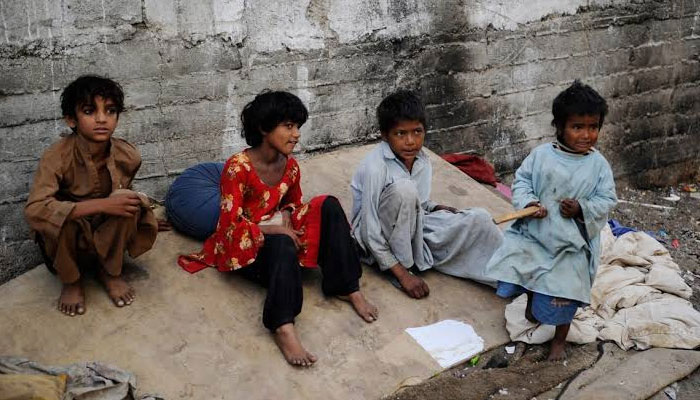
More than two years after the federal government declared a national education emergency, efforts to bring more than 25 million out-of-school children in Pakistan into the fold of education continue to fail to achieve the desired results due to deep structural problems, persistent financial weakness, disjointed administrative structures, poor governance and uneven capacity of the provinces._x000D_
_x000D_
This was revealed in a comprehensive comparative policy review report prepared by the Civil Services Academy (CSA), which said that although all provinces have formulated ambitious education roadmaps under the National Education Action Plan (NEAP) 2026, the real problem is not policy formulation but their effective implementation._x000D_
_x000D_
The current education crisis facing Pakistan is not temporary but decades-long. According to the Pakistan Institute of Education (PIE), available historical data on out-of-school children show that poverty, rapid population growth, weak governance and persistent underinvestment in education have exacerbated the crisis with each passing year._x000D_
_x000D_
According to the report, from the 1990s to the 2010s, the Academy of Educational Planning and Management (AEPAM) was responsible for monitoring out-of-school children, but during this period, millions of children remained out of the education system as the government education infrastructure could not keep up with the population growth, leading to the proliferation of low-cost private educational institutions._x000D_
_x000D_
Prepared by five policy analysis groups based at the Pakistan Administrative Service Campus, the report analyzed the education policies of Punjab, Sindh, Khyber Pakhtunkhwa, Balochistan, Islamabad Capital Territory, Gilgit-Baltistan and Azad Jammu and Kashmir on the criteria of effectiveness, efficiency, equity, ethics and feasibility._x000D_
_x000D_
According to the report, the number of out-of-school children in Pakistan is between 25.1 million and 26 million, making Pakistan one of the countries with the second-highest burden of educational deprivation in the world despite the constitutional guarantee of free and compulsory education under Article 25-A of the Constitution._x000D_
_x000D_
The report states that the declaration of a national education emergency on May 8, 2024, certainly received extraordinary attention at the political level, however, each province faces different structural problems, hence the desired results cannot be achieved with a uniform national strategy._x000D_
_x000D_
According to the review, the main problem of Punjab is the large number of out-of-school children, Sindh is suffering from the collapse of the education system after primary education and climatic disasters, insurgency, difficult geography and lack of female teachers are the biggest obstacles in Khyber Pakhtunkhwa, Balochistan is in a severe crisis due to weak institutions, vast distances and dysfunctional schools, while internal inequality exists despite relatively better overall enrollment in the federal territories._x000D_
_x000D_
The report, describing Punjab as the province with the highest educational burden in the country, states that the number of out-of-school children here is between 9.6 million and 10.4 million. According to the 2026 baseline report of the Punjab School Education Department, 6.4 million children have never enrolled in school, while another 3.16 million children have left school incompletely, which shows that the problem is not only of admission but also of retaining children in the education system.
