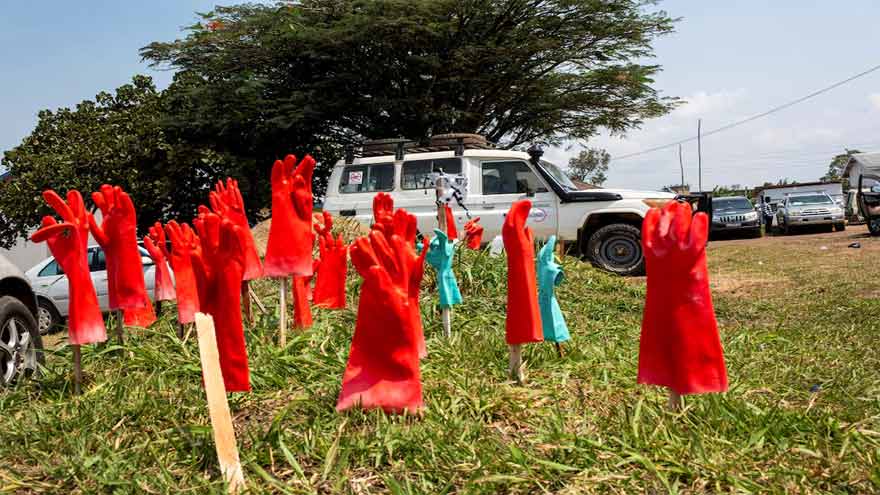
BUNIA (Reuters) – Ebola response workers in northeastern Democratic Republic of Congo staged protests outside three treatment centres on Thursday, saying they had not been paid all they were owed for their work._x000D_
_x000D_
The outbreak has infected 1,759 people and resulted in 600 confirmed deaths since it was declared almost two months ago, according to the latest government data._x000D_
_x000D_
The World Health Organization said this week transmission was continuing of the rare form of Ebola, which kills 30% â to 50% of those infected and has no vaccine or cure._x000D_
_x000D_
Dozens of members of Ebola response teams gathered on Thursday outside the Centre Medical Evangelique (CME), Elikya and Salama treatment centres in Bunia, the capital of Ituri Province, which is the hardest hit._x000D_
_x000D_
One of the protests, outside the CME, was dispersed by police._x000D_
_x000D_
It was not immediately clear whether the protests had disrupted operations at the treatment centres._x000D_
_x000D_
Speaking to journalists in Bunia, Health Minister Samuel Roger Kamba acknowledged there had been problems with “the human resources pillar of the response”, namely with ensuring that the lists of people who needed to be paid â were updated and accurate._x000D_
_x000D_
A Congolese health official, who asked not to be named as he was not authorised to speak to the press, told Reuters that talks were ongoing with workers who were threatening to go on strike, but that so far no strike had begun._x000D_
_x000D_
WORKERS SAY PAY IS LATE, DOES NOT REFLECT WORKLOAD_x000D_
_x000D_
In â a letter dated July 5 and addressed to Ituri’s governor and health officials, Ebola response workers said they had not been paid for services rendered since the start of the latest Ebola outbreak, which was announced on â May 15._x000D_
_x000D_
The letter said this had resulted in “significant socio-economic difficulties” and severely affected the workers’ living conditions._x000D_
_x000D_
The workers also complained that compensation rates were too low relative to the risks and workload â involved in the Ebola response._x000D_
_x000D_
They demanded an increase in daily allowances and called for the removal of income tax deductions, arguing that allowances constituted bonuses rather than salaries.
