
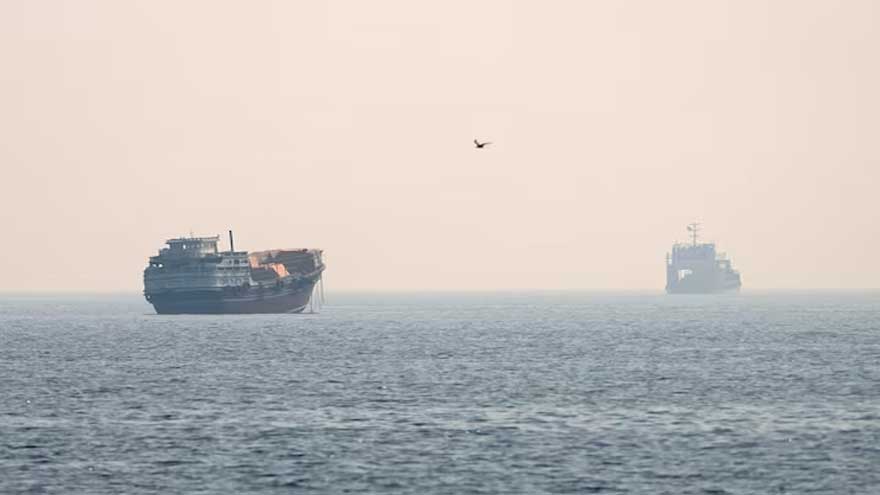
SINGAPORE (Reuters) – The number of vessels transiting through the Strait of Hormuz ticked up on Tuesday, with most of them linked to Iranian trade, before a US blockade took effect on Wednesday, shipping data showed.
_x000D_
US President Donald Trump on ‌Tuesday reimposed a naval blockade of all Iranian ports and threatened to hit power plants and bridges next week unless Tehran resumes negotiations, in the latest escalation of the US conflict with Iran.
_x000D_
Nine of the 11 vessels that passed through the strait on Tuesday sailed via the Iranian route, ship-tracking data on Kpler showed.
_x000D_
Of these, three empty oil tankers — one â Aframax-sized vessel and two Very Large Crude Carriers — entered the strait, the data showed.
_x000D_
Vessels that exited the strait with Iranian exports included one VLCC carrying 2 million barrels of crude, a medium-range tanker with refined products, and two tankers carrying liquefied petroleum gas, according to the data.
_x000D_
A laden methanol tanker and a dry bulk carrier with iron ore aboard also made their way out of the Gulf on Tuesday, the data showed.
_x000D_
There were no visible entries or exits for tankers to load oil and gas from other Gulf producers on Tuesday.
_x000D_
Strikes between the US ‌and Iran â in the Middle East intensified this week, leading to a sharp slowdown in shipping through the Strait of Hormuz, where about a fifth of global oil and liquefied natural gas shipments passed through each day before the war began in February.
_x000D_
The United States said late on Tuesday that Iran had attacked â seven commercial ships over the last week, leading to nearly a dozen crew members being killed, missing or injured.
_x000D_
Attacks on Emirati supertankers have caused Middle East spot crude prices to strengthen this week, with prompt month prices â now higher than those in future months, indicating tight supplies.
_x000D_
“The next phase of Gulf flow recovery could be slower than the initial phase even after geopolitical de-escalation,” Goldman Sachs said in â a note on Wednesday.
_x000D_
The analysts pointed to a sharp drop in flows through Omani and international routes following the recent tanker attacks, saying it showed that “shippers using the non-Iranian Hormuz lane remain risk-averse.”