
In 2013, Micheal Krepon wrote an essay in which he argued that the US, since 1945, has generally failed to end wars victoriously and decisively — with the exception of the first Gulf war against Saddam Hussein._x000D_
_x000D_
He quotes from Fred Charles Ikle’s 1971 book “Every War Must End†the following line: “Government leaders that make momentous decisions to go to war, or decisions that could lead to war, are obliged to have military and diplomatic strategies to end hostilities on favorable terms.â€_x000D_
_x000D_
Ikle warns US policymakers that American forces must not be committed to combat without a clear military strategy. He argues that most leaders focus heavily on how wars start and are fought, but pay far less attention to how they actually end._x000D_
_x000D_
When US President Donald Trump ordered strikes on Iran in late February, it was apparent that Washington lacked a coherent strategy. There was little clarity about the objectives of the war, how to achieve them, or what a clear exit strategy would look like._x000D_
_x000D_
This reminds us of Ikle’s argument that many wars in history dragged on or turned unstable because no one planned the ending properly. Did the US plan the ending of the war against Iran properly?_x000D_
_x000D_
Recently, Tehran and Washington reached a memorandum of understanding that would extend a fragile ceasefire between the two sides for 60 days and reopen the Strait of Hormuz, which Iran blocked when the US and Israel launched the war. The signing of the MoU raises important questions about its implications for Turkiye and how Ankara assesses the path toward bringing the war to an end._x000D_
Should the agreement evolve into a lasting political settlement, Turkiye could be among the war’s biggest winners_x000D_
Dr. Sinem Cengiz
_x000D_
_x000D_
When Washington launched the war, Ankara was not alone in seeing its efforts fail to prevent it. From the outset, Turkiye — sharing a long border with Iran — viewed the conflict with deep concern, fearing that instability could spill across its borders._x000D_
_x000D_
Of particular concern was the possibility that unrest in Iran could embolden Kurdish militant groups, a scenario that could undermine Turkiye’s ongoing peace process with the Kurdistan Workers’ Party and create a security challenge that Ankara would have to confront._x000D_
_x000D_
From Ankara’s perspective, a weaker Iran may create a space for Turkiye to project influence. However, the potential benefits of a diminished Tehran are outweighed by the risks related with a destabilized Iran, including refugee flows, Kurdish militancy, border insecurity, and disruptions to energy flows._x000D_
_x000D_
This explains why Ankara has consistently prioritized securing a ceasefire that could prevent the war from escalating across the wider region, while also ensuring that any potential regime change does not emerge as a result of Israeli or American intervention. At this stage, the MoU appears to align with Ankara’s expectations._x000D_
_x000D_
Consequently, Ankara has welcomed it, albeit with cautious optimism. Its caution is tactical, however, not a strategy. Turkiye recognizes that this is a long-term process. The MoU is not an immediate solution to all concerns; rather, it represents the beginning of a process that must be managed carefully and responsibly._x000D_
_x000D_
Turkiye also sees a role for itself in this process. According to Ankara, any comprehensive agreement should not only include the states that have signed the MoU but also take into account the interests of countries that have been significantly affected by the war. Turkiye has been among those nations affected on the economic and security fronts. For Ankara, the success of the deal depends on the inclusion of all relevant actors._x000D_
_x000D_
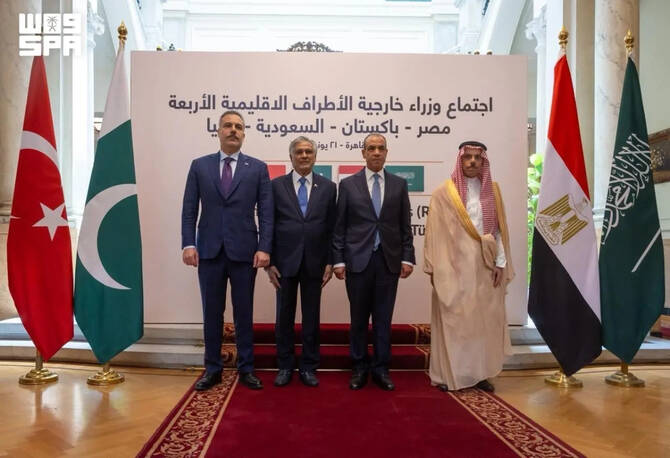
Therefore, Turkiye is seeking to strengthen regional coordination with like-minded middle powers. The foreign ministers of Turkiye, Saudi Arabia, Egypt, and Pakistan recently met in Cairo under the R4 framework and welcomed the deal as a positive step toward a durable political settlement._x000D_
_x000D_
From Turkiye’s perspective, several important technical issues still remain unresolved and because both sides are using diplomacy to buy time, a comprehensive settlement is unlikely to emerge quickly. Turkiye is also concerned that Israel could attempt to disrupt the implementation of the MoU if the opportunity arises. Israel’s military actions in Lebanon and Syria are already destabilizing factors for Turkiye._x000D_
_x000D_
Even as the MoU brought some economic relief, it did not undermine Iran’s influence in the region. For example, even during the war, the Iran-backed militias in Iraq were influential in affecting Iraqi domestic politics. Iraq’s stability is critical for Turkiye, for at least three reasons: counter terrorism, economic connectivity cooperation, and the role of Iran. There are similar concerns with regard to Syria._x000D_
_x000D_
Should the MoU evolve into a lasting political settlement, Turkiye could be among the war’s biggest winners. Although Turkiye was particularly vulnerable to the war’s spillover effects, it managed to keep communication channels open with both Washington and Tehran. Even when Iran attacked Turkiye, Ankara managed to preserve calm._x000D_
_x000D_
For its part, Tehran appeared careful not to cross Turkiye’s red lines by focusing its attacks on installations hosting US assets. Despite missile attacks and rising energy costs, the war strengthened Ankara’s standing within NATO and encouraged deeper defense cooperation with Gulf partners._x000D_
_x000D_
Having said that, Turkiye’s political elite have long believed that actions on the ground matter more than commitments on paper. Therefore, Ankara will judge the success of the peace process not by declarations alone, but by concrete steps toward de-escalation and a sustainable settlement._x000D_
_x000D_
This is particularly important as Turkiye prepares to host the NATO summit in July, which Trump is expected to attend. Ahead of that gathering, Ankara would like to see tangible progress in implementing the MoU. More fundamentally, Turkiye seeks to play an active role in shaping a viable exit strategy from this war. (Courtesy Arab News)