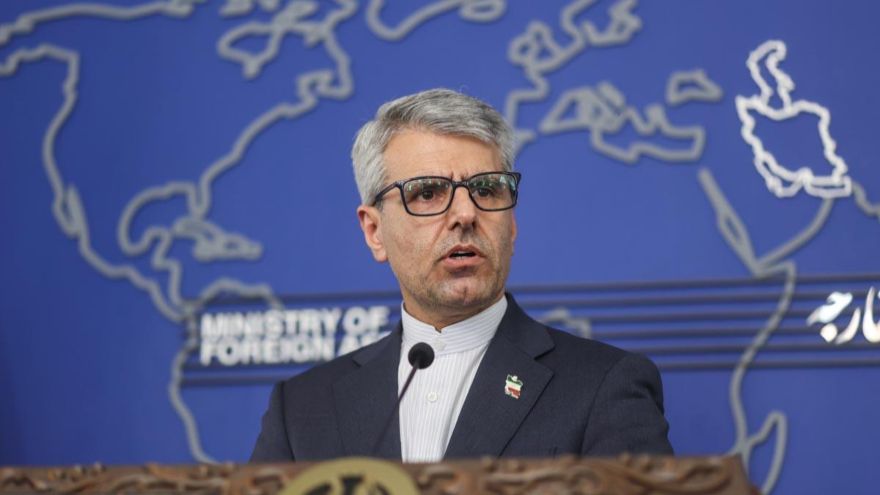
TEHRAN (Web Desk) – Iran has said that ending the war in Lebanon is a central part of the memorandum of understanding (MoU) being finalised with the United States, with Tehran describing the development as a significant step towards ending a wider conflict._x000D_
_x000D_
Iranian Foreign Ministry spokesperson Esmaeil Baghaei said Lebanon was specifically included in the agreement and that respecting the country’s sovereignty and territorial integrity formed part of the interim arrangement._x000D_
_x000D_
Speaking during a press briefing, Baghaei said Tehran had demonstrated its commitment to achieving a ceasefire in Lebanon and would continue using available measures to ensure all sides fulfil their obligations. His comments came after Iran announced progress towards a deal with Washington following months of heightened regional tensions._x000D_
_x000D_
The spokesperson said the finalised text of the agreement refers to Lebanon three times, underlining what he described as the importance of preserving the country’s security, unity and independence._x000D_
_x000D_
Lebanon clause_x000D_
_x000D_
Baghaei said the cessation of hostilities in Lebanon was “part and parcel†of the memorandum of understanding, adding that Iran considered the issue inseparable from efforts to end the broader conflict._x000D_
_x000D_
He said Iran had already shown its seriousness regarding a Lebanese ceasefire and would continue monitoring developments closely. According to Baghaei, Tehran would use its available tools when necessary to encourage other parties to meet their commitments under the agreement._x000D_
_x000D_
The Iranian official also addressed recent Israeli strikes in Beirut’s Dahiyeh district, condemning the killing of a senior Hezbollah commander and civilians. He said Tehran’s decisions were based on a comprehensive assessment of national interests and claimed the attacks would not derail the wider diplomatic process._x000D_
_x000D_
Baghaei described the agreement as the outcome of what he called Iran’s resistance during a 110-day conflict, while criticising the actions of the United States and Israel during the confrontation. He also referred to previous strikes on Iran, including attacks on nuclear facilities, and said Tehran would continue pursuing legal action through international channels._x000D_
_x000D_
Economic terms_x000D_
_x000D_
The Iranian spokesperson said the agreement includes economic measures focused on sanctions removal, access to frozen funds and reconstruction efforts._x000D_
_x000D_
According to Baghaei, the release of frozen Iranian assets was a key element of the agreement and represented what Tehran considers its legal right rather than a financial concession. He said arrangements had been secured to address the issue._x000D_
_x000D_
He added that reconstruction damages were also included in the memorandum, describing compensation demands as an important issue for the Iranian public. Baghaei said Iran would continue seeking accountability for damages caused during the conflict._x000D_
_x000D_
The spokesperson said the United States would be required to remove sanctions, including primary and secondary restrictions, along with United Nations Security Council measures and relevant resolutions linked to the International Atomic Energy Agency’s Board of Governors._x000D_
_x000D_
He also announced that waivers allowing the unrestricted sale of Iranian crude oil, petroleum products and petrochemicals would come into effect immediately after the formal signing of the memorandum, which he said was expected on Friday._x000D_
_x000D_
Regional issues_x000D_
_x000D_
Baghaei said a regional tour involving Iranian officials was planned before the final signing process, with details expected to be announced later. He added that the final timeline for the signing ceremony would be determined within the coming 48 days._x000D_
_x000D_
Responding to questions about whether the agreement represented renewed friendship with Washington, Baghaei rejected that interpretation, pointing to decades of mistrust between Iran and the United States. He described the deal as a move towards reducing tensions and ending a conflict that affected the region._x000D_
_x000D_
He said the agreement had broad backing from Iranian state institutions, including the Supreme National Security Council, and praised officials involved in the negotiations, including Parliament Speaker Mohammad Bagher Ghalibaf and Foreign Minister Abbas Araghchi._x000D_
_x000D_
Baghaei also discussed the Strait of Hormuz, saying Iran and Oman would coordinate arrangements to ensure safe navigation through the strategic waterway. He said the agreement requires Iran to establish safety measures in consultation with Oman and other stakeholders._x000D_
_x000D_
The spokesperson clarified that Iran did not intend to impose arbitrary transit charges but said a structured fee system could be introduced for navigation services, environmental protection and maritime insurance arrangements._x000D_
_x000D_
Addressing concerns over possible violations of the agreement, Baghaei said the United States would be responsible for ensuring compliance, arguing that any breach by regional allies would be considered a failure by Washington to uphold the accord._x000D_
_x000D_
He added that while diplomacy was moving forward, Iran would continue pursuing legal measures related to the conflict and would not abandon claims linked to what it described as unlawful actions.
